
Wondering when to schedule that first orthodontic exam? The question of when should my child first see an orthodontist has a clear answer from the American Association of Orthodontists: by age 7. At Noyce Orthodontics, we welcome children for a complimentary first evaluation around this age, giving families early insight into how a child’s smile is developing.
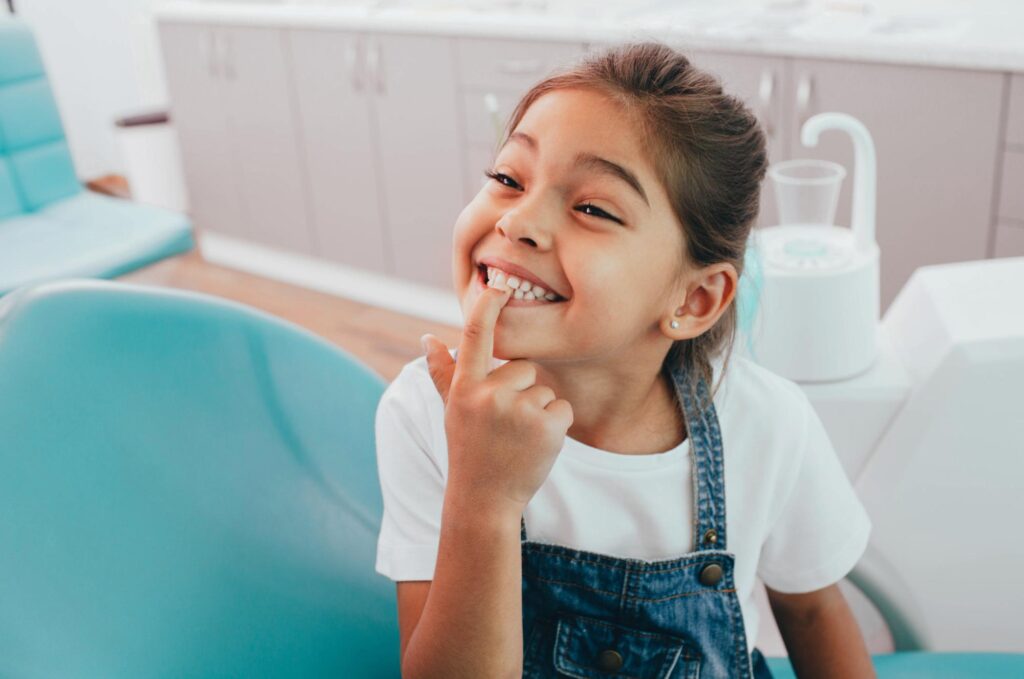
What Is the Age 7 Orthodontic Visit?
The age 7 orthodontic evaluation is a short, no-pressure checkup recommended by the American Association of Orthodontists (AAO) for every child. By this age, the first permanent molars and front incisors have usually come in, giving us enough information to assess how the bite and jaw are developing.
This visit is not a commitment to braces. It’s an evaluation. Our orthodontist in St. Joseph and Maryville, MO reviews jaw growth, bite development, and tooth eruption patterns to spot anything that may need attention now or later. Most age 7 visits at Noyce Orthodontics result in simple monitoring rather than immediate treatment. Families leave with answers, a plan, and peace of mind, not a treatment contract.
Think of it as a baseline. Even if everything looks great, we have a starting point to compare against as your child grows. If something does need early attention, catching it now often means simpler solutions down the road.
How the First Orthodontic Visit Works
Your child’s first orthodontist visit for kids at Noyce Orthodontics is designed to feel welcoming, not clinical. The whole visit typically takes about 30 minutes and is completely painless. Here’s what to expect, step by step:
- Warm welcome and tour. Our team introduces your child to the practice so they feel comfortable before anything begins.
- Visual exam. Dr. Noyce examines the teeth, bite alignment, and jaw relationship. No tools poking or prodding, just a careful look.
- Digital scan or panoramic X-ray if needed. Using our iTero Scanner or a panoramic image, we can see unerupted teeth and jaw structure without discomfort.
- Photos for the record. We take a few photos of the teeth and face to document a baseline we can compare to in future visits.
- Habit and history review. We ask about thumb sucking, mouth breathing, snoring, and any concerns you’ve noticed at home.
- Parent discussion. Dr. Noyce walks you through findings, answers questions, and explains whether monitoring or early treatment makes sense.
No pressure. No sales pitch. Just honest guidance from a practice that genuinely cares about getting the timing right for your child.
What the Age 7 Visit Specifically Checks
The pediatric orthodontic exam covers more than just whether teeth look straight. Dr. Noyce evaluates several developmental factors that only an orthodontist is trained to catch at this age:
- Bite classification. We check for overbite, underbite, crossbite, and open bite. Some of these are far easier to address while the jaw is still growing.
- Crowding and spacing. As permanent teeth come in, we can see whether there’s enough room or whether crowding may become a problem.
- Jaw width. A narrow upper jaw sometimes benefits from an expander during childhood, which can prevent more involved treatment later.
- Eruption sequence and timing. We look at which permanent teeth have come in, which are late, and whether anything is blocked or coming in at an odd angle.
- Airway and breathing patterns. Mouth breathing, snoring, and signs of restricted airway can be flagged early. These sometimes connect to jaw development and sleep quality.
- Oral habits. Thumb sucking, tongue thrust, or prolonged pacifier use can shape the bite in ways that are easier to correct earlier.
- Facial symmetry and jaw function. We check how the jaw moves, whether it shifts to one side when biting, and whether growth looks balanced.
This checklist is why the age 7 orthodontic evaluation matters so much. Many of these issues aren’t visible to parents and don’t show up during a routine dental cleaning. Early identification means more treatment options and often simpler solutions.
Early Treatment vs. Monitoring: What Most Families Hear
Here’s the reassuring truth: most children don’t need braces at age 7. The majority of families leave their first visit with a monitoring plan, not a treatment plan. We’ll typically see your child every 6 to 12 months to track growth and eruption.
For the smaller group of children who benefit from early intervention, Phase 1 orthodontics can address specific structural issues while the jaw is still growing and responsive. Phase 2, which usually involves full braces or Spark aligners, generally begins between ages 10 and 14 once most permanent teeth are in.
| Factor | Phase 1 (Interceptive) | Phase 2 (Comprehensive) |
|---|---|---|
| Typical Age | 7-10 years | 10-14 years |
| Primary Goal | Guide jaw growth, create space, correct bite issues | Align all permanent teeth and finalize bite |
| Common Appliances | Expanders, partial braces, space maintainers | Damon system braces, Spark aligners |
| Duration | Typically 6-12 months, followed by resting period | Typically 12-24 months |
| Who Needs It? | A smaller share of children with specific concerns | Most children who pursue orthodontic treatment |
Early treatment, when needed, can reduce the likelihood of tooth extractions or jaw surgery later in life. But early treatment is never recommended just to get started sooner. Dr. Noyce only suggests Phase 1 when there’s a clear benefit to acting now rather than waiting.
Signs Your Child Should See an Orthodontist Sooner
While age 7 is the general guideline, some children benefit from an earlier visit. Watch for these signs your child needs braces or an orthodontic evaluation:
- Early or late loss of baby teeth compared to siblings or classmates
- Crowded, crooked, or protruding front teeth as adult teeth come in
- Crossbite or underbite, or a jaw that visibly shifts to one side when biting
- Mouth breathing or snoring, especially if it affects sleep quality
- Thumb sucking or pacifier use past age 5
- Difficulty chewing or biting, or speech issues tied to tooth position
- Jaw clicking, popping, or facial asymmetry
- Teeth that don’t meet properly when the mouth is closed
If you notice any of these, you don’t have to wait until age 7. A free consultation can give you clarity and a plan.
Frequently Asked Questions
Should my 7 year old see an orthodontist?
Yes. The American Association of Orthodontists recommends every child have a first orthodontic evaluation by age 7. At this age, enough permanent teeth have erupted for an orthodontist to spot developing bite and jaw issues, while there’s still time to guide growth if needed.
Is 7 years old too early for braces?
Usually, yes. The age 7 visit is an evaluation, not a treatment start date. Most children simply enter a monitoring program. Only a smaller group benefits from Phase 1 interceptive treatment at this age, and even then, braces aren’t always the chosen approach. Expanders or partial appliances are more common in early treatment.
Why would a 7 year old go to an orthodontist?
To check how the jaw is growing, how the bite is developing, and whether permanent teeth are coming in correctly. Early evaluation lets Dr. Noyce catch issues like crossbite, severe crowding, or airway concerns while they’re easier to address. Most visits reassure parents that everything is on track.
Can a 7 year old go to the orthodontist?
Absolutely. Age 7 is actually the ideal time for a first visit according to AAO guidelines. The exam is painless, takes about 30 minutes, and is complimentary at Noyce Orthodontics. Your child will meet our team, get a visual exam, and leave with a clear picture of what, if anything, comes next.
What if my child is already older than 7?
Still beneficial. Age 7 is a guideline, not a deadline. Children of any age can benefit from an orthodontic evaluation, and many patients begin treatment during the preteen or teen years when more permanent teeth are in place.
Does the first visit hurt?
Not at all. The first orthodontist visit for kids is a painless visual exam. Dr. Noyce looks at the teeth and jaw, we may take a few photos or a digital scan, and we talk through what we see. No shots, no drilling, nothing uncomfortable.

Ready to schedule your child’s complimentary consultation? Noyce Orthodontics welcomes families at both our St. Joseph practice (3904 Beck Rd., Ste 190) and our Maryville practice (1410 S Main Street). Call (816) 364-1911 or request a free consultation online. You’re in the right place!